Working with different substrates
Lime specialists since 1982
North of England
UK
Scotland
Europe
Substrate, defined.
A substrate is a foundational base, surface, or medium upon which a process occurs, an organism lives, or a substance acts. It also depends on the context:
-
The surface or medium on which an organism (like a plant, fungus, or coral) lives, grows, and obtains nutrients. In aquatic environments, it refers to the riverbed or lake floor.
-
The specific molecule or chemical upon which an enzyme or catalyst acts to produce a chemical reaction.
-
The base material onto which another substance (like ink, paint, or adhesive) is applied. In electronics, it is the base layer (such as a silicon wafer) used to build computer chips.
-
The underlying layer of soil, rock, or other material beneath topsoil or a structural foundation.
In our context; the substrate is the ‘wall material’ that we are going to apply our material (natural lime mortar) on to.
Construction
Plastering
Pointing
Rendering
At The LimeSmith
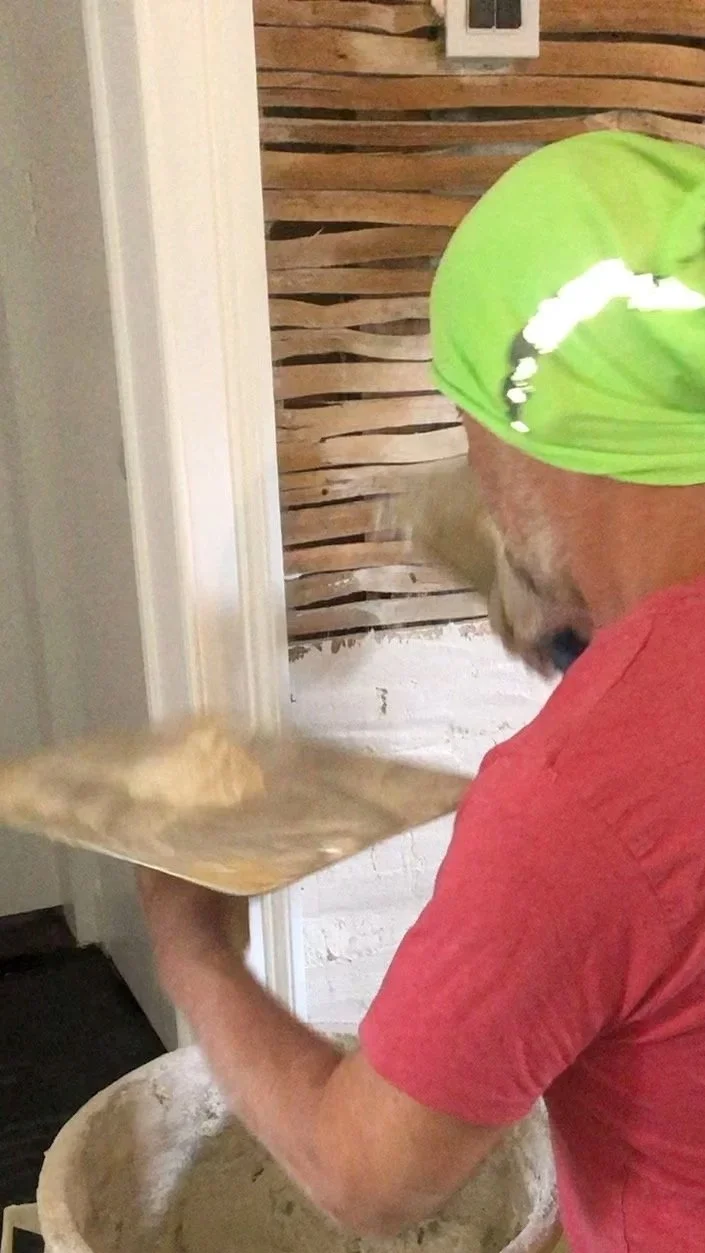
We have experience of soft brick backgrounds common in older (Victorian and previous) buildings, natural stone (limestone, sandstone, granite) blocks common in Georgian and previous construction, more modern block work, modern wood/wool boards and variations both internally and externally, traditional lath walls (more on this later) and also much older wall building materials such as Wychert and Cob (much more on this later).
Each wall material requires a slightly different approach but all will take natural lime mortar and benefit from the breathability and thermal benefits of the material.
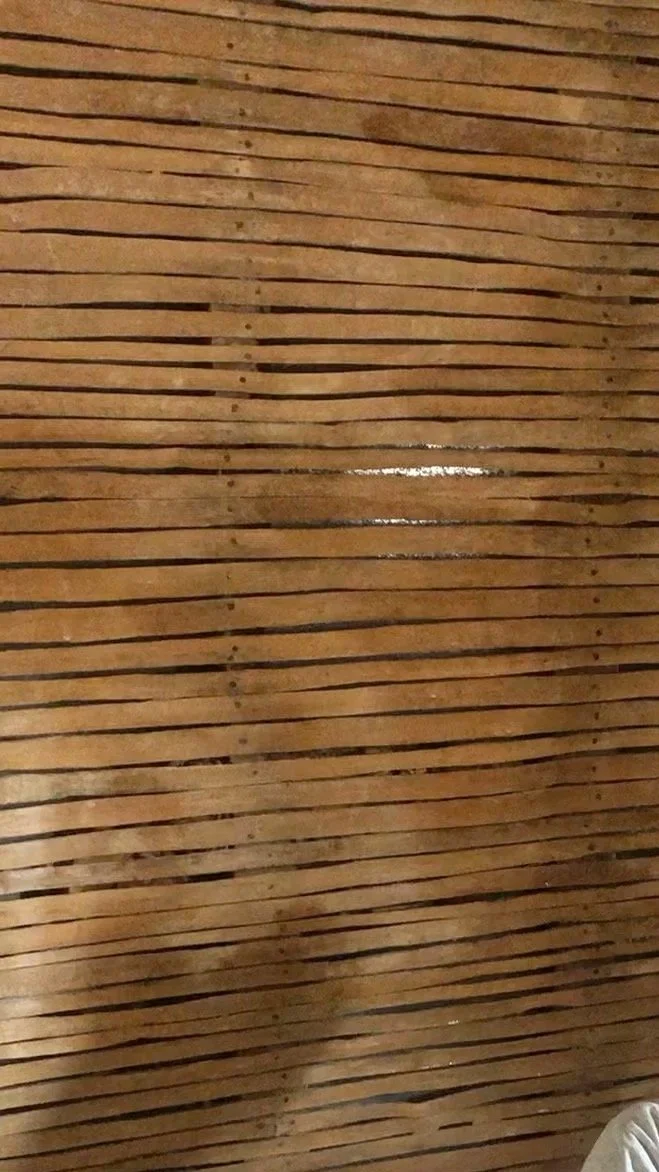
Lath work – before the advent of modern internal wall partitioning materials like plasterboard (in the 1960’s) the only options were to use brick or stone as the substrate – which were costly and physically very heavy requiring load bearing support – or to create a lightweight wall structure out of lath.
The lath is simply a ¾” strip of hard wood (traditionally hand riven oak or chestnut) attached to a wooden frame with a ¼” gap between each run attached horizontally. The gap between each lath run allows the first layer of lime plaster to be forced into it creating what is known as a ‘nib’ – this is a mechanical key that allows to lime to grab and hold onto the lath substrate forming a solid bond once the material has started to calcify and a base for the successive coats of lime plaster.
The lath wall is the more modern day equivalent to the ‘withy hurdle or panel’ known as a ‘wattle’ (made of interlaced wooden strips) that would accept a mixture of lime rich earth and dung (‘daub’) to create the medieval wattle and daub wall building process.
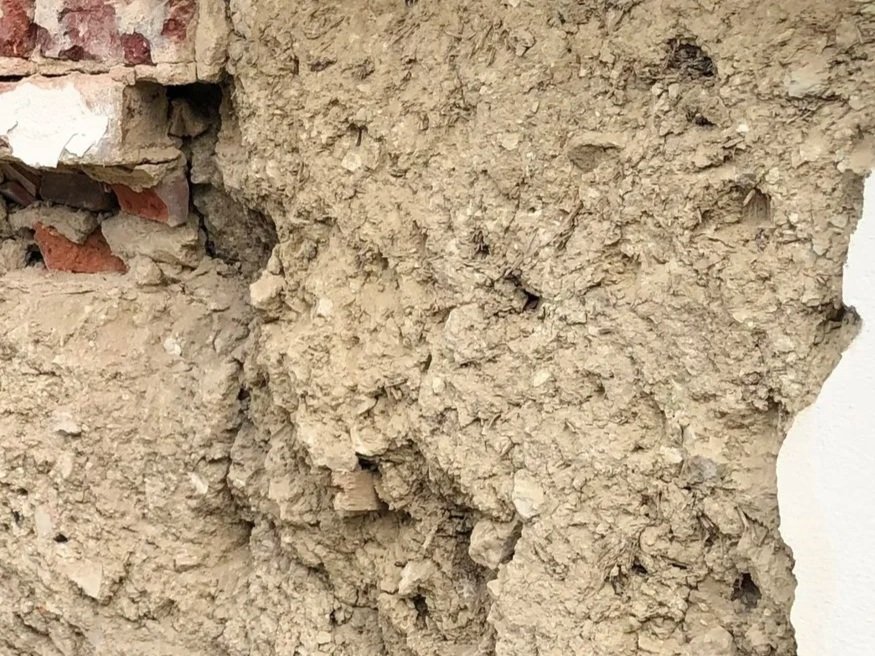
Wychert (and Cob) – In Anglo Saxon the word Wychert means ‘white earth’ it is lime rich soil that is usually excavated from river beds in the local area.
Wychert is very common as a building material in the south of England and was used extensively up to approximately 250 years ago. Once the lime rich soil has been excavated it is laid out on a suitable background and mixed with straw, allowed to start drying (by the process of calcification – air drying) and then applied on to the foundation material (normally a wide, raised hard stone foundation known as a ‘grumbling’ or ‘grumpling’).
Wychert is laid in sections up to 3’ wide and 3-4’ high and allowed to dry and compress before the subsequent layer is applied. The end result is a very thick, very strong, very warm wall that breathes naturally and is an ideal substrate to accept lime mortar.
First coats
of Wychert
Preparation and consolidation....
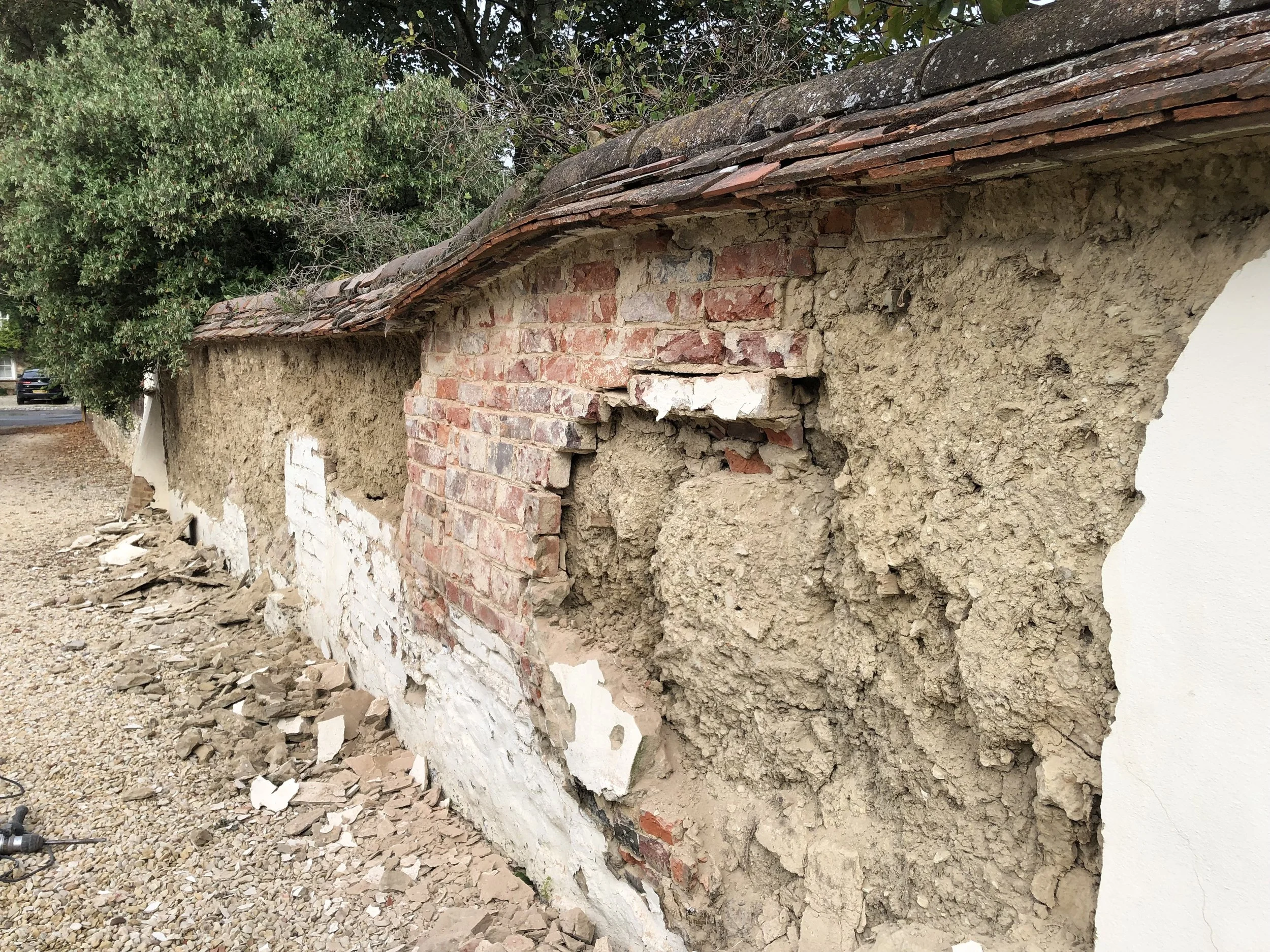
You have seen the state of the exposed wychert wall in the title picture, there are great chunks missing and the wall is highly irregular.
To ensure a traditional 'rolling flat' finish all of this needs to be built out (or parged) using coarse lime mortar and soft brick or tile to make more regular, then consolidated with several layers of lime mortar backing.
This provides the perfect background to finish on.
The final coat
..and finally after weeks of building out the wall is good enough for the finishing coat. This is 'finer' lime with no coarse aggregates and applied slightly thinner than the backing coats.
It follows the contours of the wall to give the required 'rolling' traditional finish.
Note that this colour is the natural lime dried colour, it is a very brilliant white, lovely in its own right or a perfect canvass for additional colour.
If you're interested in working with us, complete the form with a few details about your project.
We'll review your message and get back to you within 48 hours.